Showing posts with label Al Khor. Show all posts

Wednesday, February 8, 2012

In Qatar? Note these important numbers


Ministries
Ministry of Endowments and Islamic Affairs +974 4470777
Ministry of Economy and Commerce +974 4945555
Ministry of Education +974 4941111
Ministry of Foreign Affairs +974 4334334
Ministry of Interior +974 4849525/+974 4849510
Ministry of Defence +974 4614111
Ministry of Municipal Affairs and Agriculture +974 4336254/+974 4413331
Ministry of Energy and Industry +974 4846444
Ministry of Justice +974 4842222
Ministry of Labour and Social Affairs +974 4841444
Ministry of Finance +974 4461444

Institutions
Academy for Sports Excellence (Aspire) 4136000
Kahramaa 4845555/4845464
Qatar General Post Office 4464336
Qatar Foundation for Child and Women Protection 4679444
Qatar University 4852222
Qatar Red Crescent Society 4435111
Institute of Administrative Development 4406666
Family Consultation center 4892888
Qatar Post Authority 4464000
Qatar Foundation for Education, Science & Community Development 4927000

Media Institutions
Raya 446655
Al Watan 4660400
Al Saharq 4557777
Qatar Radio & TV Corporation 4859555
Al Jazeera Channel 4896666

Healthcare Centres

Hamad General Hospital
Operator of H.G.H 4394444
Administration of H.G.H. 4391001
Patients Relations 4391427
Public Relations Section 4392012
Admitting 4392049 - 4392441
Intensive Care Unit 4392108
Hamad International Medical Training Center 4883643
E.M.S. Department 4392050

Women’s Hospital
Operator Women Hospital 4396666
Administration, Women Hospital 4393939
Delivery Room 4393518
Admitting 4393117
Intensive Care Unit 4393395
I.V.F. 4393020
Emergency Unit 4393344
Health Sciences Library 4393838

Rumaillah Hospital
Operator of Rumaillah Hospital 4393333
Administration of Rumaillah Hospital 4397000
Public Relations Section 4393358
Admitting Geriatrics 4393665
Children's Rehabilitation Unit Intensive Care Unit 4393348
TB Clinic 4393270
Psychiatry Unit 4384542 - 4384502
Plastic Surgery 4393172 - 4393647
Stroke Unit 4393196
Physical Medicine & Rehabilitation 4397009
E.N.T. Unit 4393349
Prosthetics & Orthotics 4393587
Dental Section 4393082
Dermatology Section 4397026
Burns Unit 4393174
Cancer Center 4392723
Special Education Section 4397061
Speech Therapy Unit 4393107

Primary Health Centres
Al Montaza Center 4435784
Madinat Khaleefa Health Center 4862655
Al Rayyan Health Center 4803461
Airport Health Center 4675633
West Bay Health Center 4837790
Al Shammal Health Center 4731232
Al Khor Health Center 4720224
Al Wakrah Health Center 4644453
Oman Ibn Al Khatab Health Center 4667374
Abu Bakir Health Center 4681797
Al Shahanya Health Center 4718995
Um Ghwalina Health Center 4433892

Airline companies
Qatar Airways 4496666
Gulf Air 4455444/4455205
Air Arabia 4322111
Aero Asia Airlines 4430888
Saudi Arabian Airlines 4440121
Kuwait Airways 4435340
Emirates 4384477
Oman Air 4440456
Etihad Airways 4366657
Royal Jordanian Airlines 4351422
Tunis Air 4458306
Moroccan Airways 4458306
Yemenia Airlines 4458387
Syrian Arab Airlines 4412911
Egypt Air 4458325
Cathay Pacific 4458318
Lufthansa 4310633
Alitalia 4321427
British Airways 4321434
Turkish Airlines 4433028
Aeroflot 4458306
Air France 4321208
Austrian Airlines 4441161
KLM 4440320/4445101
American Airlines 4436600
Czech Airlines 4458306
Romania Airlines 4458306
Air India 4426889
Indian Airlines 4356040
Biman Air Bangladesh 4413054
Iran Air 4415318
Iran Aseman Airlines 4364799/4439333
Pak 4418022
Shaheen Air 4444440
Air China 4441161
Srilankan Airlines 4446345
Thai Air 4418666
Sudan Airways 4441159/4441161

Banks and Currency Exchange
Qatar Central Bank 4456456
Qatar National Bank 4407777
Bank of Qatar 4253555/4232222
Commercial Bank of Qatar 4490000
Doha Bank 4456000
Qatar Islamic International Bank 4385888
Qatar Islamic Bank 4448444
Qatar International Bank 4473700/4473888
Al-Rayan Bank 4253333
Qatar Development Bank 4421600
Arab Bank 4387777/4387878
Mashreq Bank 4413213
Alkhaliji Bank 4996000
HSBC 4382138/4382100
Banque Paribas 4424786/4378378
Standard Chartered 4414252
Bank Saderat Iran 4414646
United Bank Limited 4254400
Al-Fardan Exchange and Finance 4408408
Habib Qatar International Exchange 4328853

Theatres and Cinemas
Al Khaleej Cinema 4671811
Doha Cinema 4671811
City Centre Cinema 4934934
The Mall Cinema 4678666
Landmark Cinema 4881675
Amir Cinema 4424913
Palace Cinema (Royal Plaza) 4130000
Qatar National Theater 4831246

Companies
QTEL +974 4400400
Qatar National Hotel Company 4857777
Doha Securities Market 4333666
Qatar Chamber Of Commerce & Industry +974 4559111
Qatar Central Bank +974 4456456

Postal Services
DHL Qatar 4587888
Fedex 4434409
Aramex 4506611
UPS 4650606

Limousine Services
Doha limousine 4839999
Al Watan Limousine 4477999
Mustafawi Limousine 4671007
Qatar Limousine 4868688
Elite Limousine (Stretch) 4426184

Car Rental
Avis 4667744
Budget 4622678
Hertz 4677329
Europcar 4660677

Other useful telephone numbers
Police, Fire and Ambulance 999
Telephone Directory 180
International Calls Inquiry 150
Telephone Services 111
Doha Airport Air Traffic & Flights Inquiry 4629999-4656666
Qatar Metrological Department 4656590
Hamad General Hospital 4394444
Medical Commission 4679111
Customs & Ports Authority 4457457
Doha Airport Customs 4621104
Doha Port Customs 4457246
Border Points, Passports & Aliens Affairs Department 4890333
Doha Airport Passports & Security 4622105
Doha Airport (Instant Visas) 4622105
Doha Airport (Prearranged Visas) 4621751
Doha Port Passports 4457457
Traffic & Patrol Police Department 4890666
Public Relations At The Ministry Of Interior 4849444
Electricity Emergency 991
Qatar Emergency 4325959
Qatar Post Authority 4464000
Doha Securities Market 4333666
Qatar Chamber Of Commerce & Industry 4621131
Department Of Publications 4427373
Qatar Public Library 4389888
Qatar Photographic Society 4410209
Visual Arts Centre 4676251
Qatar National Museum 4442191
Qatar University 4852222
Youth General Authority 4316372
Qatar Red Crescent Society 4435111

Saturday, January 14, 2012

Al Khor Fly-in


It was already 11.50 am when Vij told me about the Fly-in at Al Khor. He wanted to visit the event not just to see the flights, but also to have a first-hand experience, sitting in those small flights. Then, we just thought of having lunch outside and left home, wondering if we would be able to see the event properly, as it was too windy.
Fly-in at Al Khor


We reached the Al Khor airport by 1 pm and as expected it was so dusty and windy. We could see people and small children covering their faces and trying to avoid dust from falling in their eyes. Though I could cover myself with the shawl, by the time we left the place, our dress, body and cameras were smeared with a fine layer of dust, not to mention the fine layer on the body of our car…
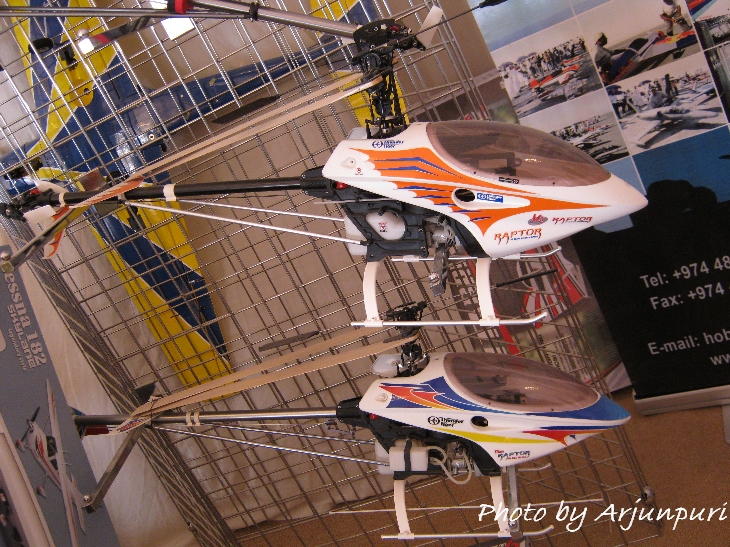
Small models for sale
This had a note saying don't sit inside ;)
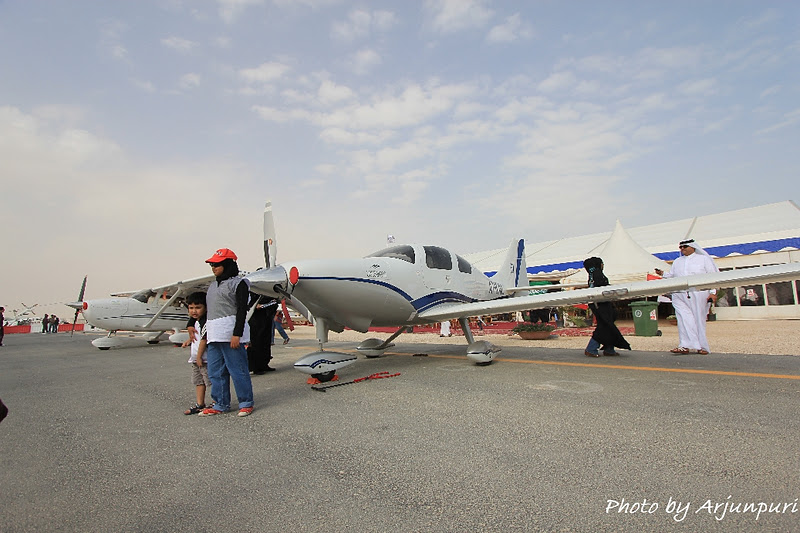
There were a diverse range of light aircraft from Qatar and the Gulf region at Al-Khor Airport and we saw several aircraft enthusiasts from all over the region gathering around the flights and clicking pics. The crowd seemed to be excited, which was obvious through their cheer and smile.
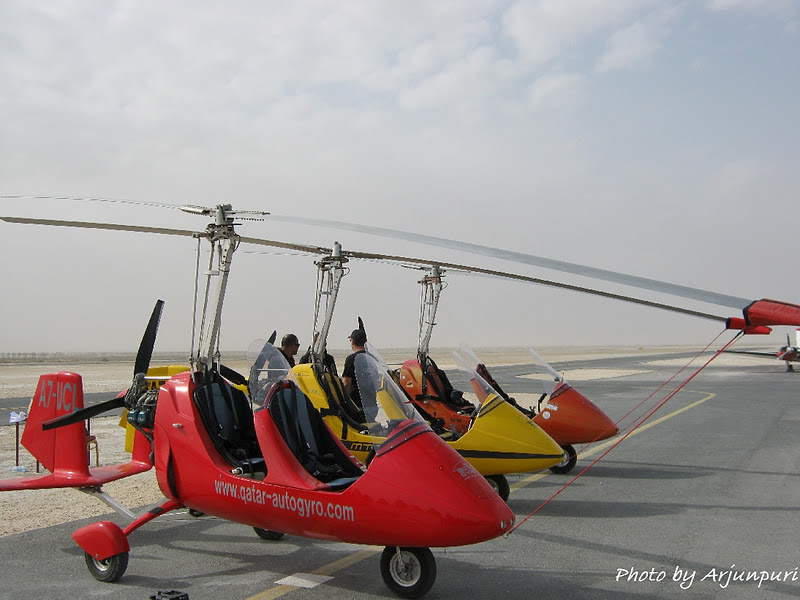
Red beauties ;)
The Fly-in, fifth in the series, was organised jointly by Qatar Civil Aviation Authority (QCAA), Qatar Aeronautical College (QAC), light aircraft owners from Qatar and the region (Kuwait, Saudi Arabia and UAE), the remote flying section at the Science Club, Al-Khor Airport, the ultra-light amateurs, and regional flight clubs.

Looking what's inside...
The objective of the event was to educate Qatari youth about the concepts and practicalities of aviation, offering them an opportunity to plan their future and choose the adequate specialisation to make a career in the discipline, should they feel the urge to ‘reach for the sky’. It was also a great opportunity for those with a passion for aviation to immerse themselves in a fantastic and original experience by taking a closer look at a diverse range of aircraft - from jets, to propeller aircraft, to micro-copters and many others.
I loved that kid's glass and bunny cap :)
The event started on Friday at 8 am and the Fly-in began at 9 am and luckily we went on the second day and there was not that much of crowd. The display of remote-controlled aircraft, set to traditional, local music was an added attracted at the site. Had we visited on Friday, we could have witnessed a police squadron providing an air show accompanied by a ‘search and rescue’ scenario, followed by a flying show and then a remote-control display, accompanied by a commentary.
The potential of the Fly-in was evident by the number and stature of Qatari companies that had sponsored the event. We could see several private and government companies like Qatar Petroleum, Qatar Steel, Qafco, Ras Gas, Al-Khor Space City, Barwa Real Estate, Qatar Foundation and its partner the US Museum of Flights, and HBK Holding sponsoring the event, and their banners fluttered in the air.
Though, we went on time, we couldn’t take the flight as it was too windy! The offer by some of the small planes to take people around the airfield at a fee of QR150 per passenger seemed quite exciting and was a great draw at the event. Visitors had to register for the ride to be called in when their turn comes. There were conditions to take a ride too. The passenger had to be at least 16, fit for flying and wear protective gear.
The planes used were mostly gyrocopters, autogyros and micro light flown by professional pilots and the trip usually lasted around 15 minutes. The demand for the trip was very high and only a few had a chance Friday.
The event featured more than 30 planes, of small and light types, alongside one helicopter and a small passenger plane. Professional pilots were available next to their parked planes to answer the visitors’ queries.
After clicking some good number of pics we left the place and went to Al Khor town. We had not had any lunch and headed towards KFC for a quick bite and alas, it was sooo bland, sooo bland that we regretted going there!

Sunday, December 4, 2011

Purple Island in Qatar


We were thinking of going to Purple Island aka Al Khor Island or popularly known as Jazirat Al-Ghanim for a while. But last Thursday when Umer took us on a long drive to Al Khor, we also went to see the island. And unfortunately, it was too dark and decided to get back there on some other day. The very next day we thought of going there, but it started raining and still we made an unsuccessful attempt of going there. But luckily, this Friday, weather was on our side and we headed towards the island again.
Towards Al Khor

Accident at Al Khor

Towards Purple Island

Towards Purple Island
We started around 12 noon and thought of having lunch in Al Khor. So I just packed some snacks and warm water and left home. After 30 minutes’ drive from Bin Omran, we reached Al Khor. Just before taking a right turn to the Purple Island saw an accident and cops enquiring both the parties.


Right turn after 5 km


Entrance of the Island
We reached Al Khor around 12.30 noon. From there we followed the signs to Al Thakhira. Then, we passed the second last roundabout that branched left to Ras Laffan, and went through the road to Al Thakhira. Then, we passed the first right turn where a signboard said Al Khor Hospital. We continue towards Al Thakhira and at the last roundabout, there was a road towards Al Khor Community. We just continued towards Al Thakhira and then took a right turn and went about 5 km following the asphalted road. Later, there was an intersection to the left and just after that we went further for another 70-80m and took a right turn which was leading to the island. We followed the firm and obvious track to the mangrove area. As we approached the island causeway, we could see a big building on to our left side. It was nearly two km from the asphalted road. After a bumpy ride for 10 minutes, we reached the Island. And no 4WD vehicle is required to reach the island as the road is firm sand, probably because heavy vehicles commute to and from the nearby sand processing plant. 
Purple Island


Breach in the causeway

Mangroves in the island


Purple Island


Breach in the Purple Island
We had to park the car at the edge of the causeway, as the vehicle cannot enter the island. Surprisingly, there were several tyre marks on the causeway till the first breach. Maybe people thought of entering the island on their vehicles and had to stop near the breach. 


Stepping stones

Tyre marks...

We saw two families enjoying their lunch at the entrance of the island. So totally, it was about 53 km from Bin Omran. The Island is in the shape of a fish and is linked to the mainland by a causeway. The walkway has been breached at two places, allowing the tidal access to the green salt-encrusted mangrove forest which encircles the walkway and the island. 


Tyre marks...


Though the island is very small, measuring only 600mx400 m, it has uncommon and interesting vegetation. The mangrove forest is not only home to fish, crabs and shellfish, but also to a wide range of birds. As we were walking, we could hear the chirping sound of several birds. Since it is winter, we could see some migratory birds. We came across some Kingfishers and some other purple and pink coloured winged beauties. Their strange, haunting calls echoed over the island creating a kind of aura in the otherwise silent island.   


Aerial roots


It was fun to slowly jump on stepping stones which were green and slippery. It was also amusing to see aerial roots of mangroves in the salt marsh. Not just that, we found so many shells scattered in the middle of island where low and high tide seawater could never reach! We saw some tiny fish playing in the sunlight and unfortunately, we didn’t come across any playful crabs, even though we expected some. 


The island is not a flat one and has several low limestone cliffs throughout. Qatar Archeology Project in 2000 confirms an intermittent human settlement on the island during the last 4,000 years. It bears the remains from a scatter of flints left by Neolithic hunter-gatherers down to the late Islamic pottery of fishing and pearling camps, and the concrete shack and abandoned vegetable garden left by a colony of Indian fishermen who inhabited the island until the late 1990s, when a series of exceptionally hot summers decimated the marine life of the area.
The Purple colour
Francis Gillespie, local author and coordinator of the Qatar Archeology Project, says that the archaeologists also found that 3,400 years ago, an industry was established on the island to supply one of the most valuable of ancient commodities - one more precious than gold. The rich, purple-red dye produced from a species of sea snail, used only for the robes of kings and the elite few whom they chose to honour. Red, the colour of blood, of fire, of the sun and therefore of life itself, was seen in many ancient societies as a symbol of power and strength. 
Producing the dyes
The dyes produced from sea snails ranged from a deep bluish-purple to the most brilliant scarlet, depending on the species used and the method of preparation. The earliest manufacturers of shellfish dyes were almost certainly the Phoenicians, a Mediterranean people originating in Lebanon. They are sometimes referred to as Canaanites, but the Greeks called them phoinikes - the red people - because of the red cloth they exported.
From the 9th to the 6th centuries BC they dominated trade in the Mediterranean, establishing colonies in Cyprus, Greece, Italy, Spain and N Africa. One of the great Phoenician cities in Lebanon, Tyre, was the home of the dye industry, which began around 1600 BC. But dye was produced all over the Phoenician empire. At Tarentum in Italy there is a small hill composed entirely of the remains of murex shells. 
The most commonly used sea snails were Murex trunculus, which yields a bluish-purple colour, and Murex brandaris which gives a red-purple. The dye is released when the hyperbranchial gland in the animal is crushed and reacts with a naturally present enzyme. 

In the case of Murex trunculus the presence of light is also necessary for the colour to develop, but not in the case of Murex brandaris. Many other species of sea snails yield the dye, among them Murex tribulus, still widely eaten in Spain today, as well as Thais purpura haemastoma and, on the little island off the coast of Qatar, Thais savignyi.

Pliny’s account
The Roman writer Pliny, writing in 70 AD, has left us a detailed description of the dye-extraction process.
The shellfish were harvested in the winter months. Murex are carnivores, living at depths of 5 to 15 metres and feeding on other shellfish by boring holes in their shells. According to Pliny, the shell-fishers used to lower baskets of shellfish bait, wait for murex to gather on them, and then quickly draw them up. The murex were then kept alive in tanks until a sufficient quantity had been gathered and dye production could begin. Ancient writers state that the dyers' hands were permanently stained red, and that the stench from centres of the trade, such as Tyre, was formidable! 
He says that the smaller shellfish (Murex trunculus) were crushed, shell and all, whereas the larger ones (Murex brandaris) were pierced and the hyperbranchial gland extracted. The crushed mass was macerated in heavily salted water for three days. This may have been to suppress the bacterial content of the vats, as the bacteria produced by rotten fish (Clostridium carnis ) are highly dangerous. The rotting shellfish were then rinsed thoroughly and boiled for ten days until reduced to a sixteenth of the original amount. Testing by dipping wool then began and boiling continued until the dye had reached the desired degree of brilliance.

The Kassite period
In Babylonia, a region in what is now Iraq, a mountain people called the Kassites invaded and took control of the country soon after 1595 BC, and the next three centuries saw a period of great economic prosperity in the region. Production of purple dye on Jazirat bin Ghanim (Al Khor island) in Qatar occurred as part of the take-over of the Dilmun trading civilisation by the Kassites between 1425 and 1225 BC.

Excavations
In the early 1980s an American archaeologist, Christopher Edens, working with the “Mission Francaise Archeologique à Qatar”, excavated a site on the island. The remains of pottery enabled it to be dated to around 1400 BC. It consisted of about five rectangular structures, several hearths and stone kists.
One pit contained the remains of around 38,000 shellfish, a species called Thais savignyi. There was also a shell midden measuring 10 by 15 metres. The top layer consisted of food remains -- shells and fish bones and debris from hearths -- but as the archaeologists dug down they came upon a deep, solid layer of shells of Thais savignyi.
The archaeologists calculated, to their astonishment, that the mound they had excavated contained the remains of almost 3 million shellfish! There were other mounds that appeared to contain similar quantities. Thais savignyi, which lives under rocks in the intertidal zone, produces a bright red dye. It requires light plus an enzyme to release the dye from the hyperbranchial gland. 

The archaeologists conducted experiments collecting the shellfish. They concluded that collecting 3 million snails would have taken 42,000 man-hours of labour: 20 people working one month a year for 7 years. There was only one possible conclusion: the site had been used for dye production.

It was unique - the first site of its kind in the entire Arabian Gulf and the only one found outside the Mediterranean. The pottery found on the site, which included the remains of huge, thick-walled vats, was clearly Kassite. Evidently the dye was being produced for use in Babylonia. Whether the workers in the little dye factory were local tribesmen, or slaves of the Kassites, or even Kassites themselves is not known. No contemporary graves have been found. 

Another site on the island is several hundred years earlier, dating to the first centuries of the second millennium BC. The presence of fragments of a distinctive red, ridged pottery known as Barbar ware identified it as belonging to the Dilmun period: the peaceful Bronze Age trading civilisation which was based in Bahrain but extended from Failaka Island off Kuwait as far south as the UAE.
Temporary settlement
Permanent settlement on the island never took place, owing to the absence of a convenient source of fresh water. The Barbar site was excavated by the French mission in the early 1980s and further investigated by a joint British-Qatari team of archaeologists in 2000. There were the remains of a number of rectangular stone-lined fire pits, and hearths. It appears to have been a temporary settlement, and is typical of a chain of small coastal sites, all featuring Barbar pottery, which run between Bahrain and the Emirates. 

Such sites, many of which are on small islands, may represent minor staging posts between Bahrain and the great trading centre at Tel Abraq in the UAE. They may have been regular stopping places, or perhaps they were visited only occasionally for mangrove wood or as shelter in poor weather. The one on the island in Qatar might even have been a fishing or pearl fishing camp. 
On the other side of the island the team in 2000 excavated a large circular dwelling hut with a sunken floor and what appeared to be stone windbreaks extending from it, perhaps erected to shelter the cooking area. Pottery from within the hut dates it to the Kassite period, but there is ample evidence of occupation in that area of the island during the Sasanian period in the early centuries AD, the final pre-Islamic period. Long after the hut had fallen into disuse, but before the coming of Islam, it was used to contain a human burial, of which a few skeletal fragments were found.

After an hour or so, we left the island. It was refreshing indeed. Maybe whenever we feel like seeing some water and listening to birds singing, we will head towards Purple Island. Oh, yes, to see some exotic flowers too! 
Private beaches in Al Khor

Old mosque in Al Khor

Boats in Al Khor


From there, we just made a trip to the beach and saw several private tents and Qataris with their families enjoying their weekend.